(440) 352-3434
Blog
Upgrading Your Protective Packaging: The Custom Foam Advantage
As enterprises reach the midpoint of the fiscal year, evaluating the efficiency, resilience, and cost structures of shipping and supply chain operations is essential for maintaining a competitive advantage. High-value components, sensitive instrumentation, and complex industrial assets require flawless logistics execution. Yet, many organizations commit a critical operational error: they invest heavily in premium, rugged hard-shell transit cases, such as Pelican, Nanuk, or Seahorse enclosures, but rely on standard, off-the-shelf foam packaging or generic fill materials inside.
Standard stock packaging lacks the precise physical fit required for sensitive components, leaving high-value assets highly vulnerable to shifting and severe impact damage during transit. Implementing an optimized protective packaging system is not merely an exercise in material procurement. Rather, it is a multi-disciplinary engineering effort that integrates advanced material science, precision fabrication, rigorous validation testing, and strategic financial modeling. True product security and cost control are achieved only when the internal foam insert is engineered with the same level of sophistication as the external container.
The True Cost of Generic Stock Foam
For engineers, quality control specialists, and logistics teams, a mid-year packaging audit provides an opportunity to analyze historical performance data and identify hidden vulnerabilities before high-volume shipping cycles commence in the fourth quarter. A common culprit behind product degradation, field failures, and costly returns is the reliance on generic materials or “pick-n-pluck” stock foam inserts.
From a physics perspective, the performance of protective packaging is defined by its ability to manage kinetic energy and safely decelerate a moving object over a controlled distance during an impact. Under the continuous vibration inherent to truck, rail, and air transport, loose-fill particles, bubble wrap, and paper padding migrate within the outer shipping container. This displacement allows the product to shift, settle against the rigid interior walls of the case, and absorb the full force of external impacts.
While “pick-n-pluck” foams offer a temporary sense of convenience, they lack long-term structural durability. The pre-cut perforations dramatically reduce the material’s tear resistance. Under the weight of heavy components or repeated transit cycles, these perforations fatigue and break down, causing localized pressure points, material degradation, and eventual bottoming out against the hard case exterior. This transfer of shock directly to the product leads to micro-movements, surface abrasion, and internal component decalibration.
The Superior Solution: Custom-Engineered Foam Inserts
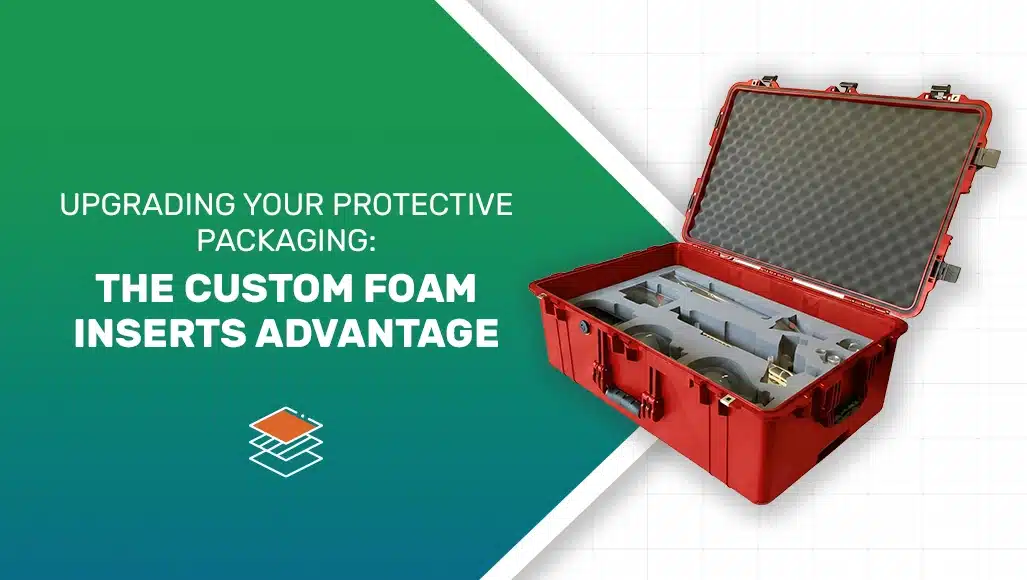
The definitive solution to these systemic transit risks is transitioning to custom foam inserts engineered specifically to eliminate movement and absorb severe impacts. Custom-fabricated foam inserts from American Foam Products offer an exact, contoured fit that encloses your equipment completely, providing unmatched multi-impact recovery and long-term structural durability across hundreds of transit cycles.
By substituting generic foam with custom inserts, companies ensure absolute repeatability in protection regardless of who handles the packaging line. Furthermore, custom inserts allow packaging engineers to right-size outer containers, eliminating the wasted space of oversized boxes filled with generic bubble wrap. This direct optimization lowers the package’s dimensional weight, effectively eliminating the expensive “air tax” generated by carrier billing models and substantially reducing overall freight and shipping fees.
Material Science & Design Principles
To build a reliable protective packaging system, design engineers must connect specialized material properties and manufacturing technologies to real-world transit hazards.
Cellular Morphology and Material Science
The performance of an engineered protective substrate is governed by its cellular morphology, density, and compressive resistance.
- Polyurethane (PU): This open-cell foam features interconnected air passages. When a load is applied, air flows freely through the cell walls, creating a soft, highly flexible, conforming medium that is exceptionally effective at absorbing low-energy vibrations and protecting lightweight, fragile components.
- Polyethylene (PE): This closed-cell foam locks air within individual, non-connecting cells. Under compression, this trapped air acts as a micro-pneumatic spring, delivering superior compressive strength, high load-bearing capacity, and excellent multi-impact recovery. These closed-cell structures are inherently hydrophobic, preventing moisture absorption and resisting the growth of mold, mildew, and rot.
- Cross-Linked Polyethylene (XLPE): Features an ultra-fine, cross-linked cellular structure that provides superior physical strength, moisture resistance, and an ultra-fine, non-abrasive surface finish. It exhibits zero outgassing, making it the ideal substrate for medical devices, surgical tools, and Class-A surface protection.
Engineering Design Principles
Engineered custom inserts rely on precise calculations to minimize deceleration forces. By tailoring the foam’s density, thickness, and cavity geometry to the specific weight and fragility limit of the product, packaging engineers can design a system that minimizes deceleration forces. A core rule of thumb in this design process is maintaining a continuous 1-to-2-inch buffer of engineered foam around all items to guarantee complete shock absorption and prevent any part of the asset from breaching its structural safety margin.
Transit Simulation and Packaging Validation Standards
To ensure that a custom foam packaging design successfully protects its contents throughout the supply chain, the complete package must undergo rigorous validation testing before deployment. Packaging validation uses laboratory transport simulation to replicate the physical hazards of distribution, including drops, severe impacts, compressions, and vibrations, avoiding the risks of real-world trial failures. The industry relies on two primary standardized testing bodies recognized by regulatory frameworks: ASTM D4169 and ISTA 3A.
- ASTM D4169: Utilizing a flexible “menu” approach, this standard allows packaging engineers to customize test sequences and adjust intensity through specific Assurance Levels to mirror a product’s actual distribution path. It typically isolates environmental stressors into distinct phases, evaluating random vibration and compression separately. This protocol is heavily favored by medical device and pharmaceutical manufacturers for regulatory compliance.
- ISTA 3A: A rigid “recipe” approach establishing non-negotiable test sequences tailored precisely to the rigors of parcel delivery networks. Notably, it mandates a combined stress test featuring random vibration with a heavy top load to simulate real-world truck trailer stacking pressures.
Both validation frameworks incorporate rigid drop-testing protocols to target a package’s structural weaknesses by executing a strict series of drops onto the package’s weakest corner (usually the manufacturer’s joint), its shortest radiating edge, its longest radiating edge, and its flat faces. Laboratories utilize specialized mechanical drop testers to ensure absolute repeatability. Hand-dropping packages introduces human error by imparting a slight rotational spin, which causes the box to correct itself in mid-air and land flatter than intended, cushioning the impact and generating false-positive data.
Strategic ROI: Protecting the Balance Sheet
Viewing protective packaging strictly as an operational expense is a counterproductive procurement strategy. Reducing material specifications to achieve minor per-unit material cost savings frequently causes an exponential increase in transit damage, draining capital via a compounding damage loop comprised of cost of goods sold losses, outbound freight, return freight, and administrative processing labor.
Beyond damage reduction, custom foam inserts generate substantial operational efficiency on the assembly line. Packing components with generic bubble wrap or loose fill is a slow, manual process requiring wrapping, taping, and manual void filling. Conversely, custom foam inserts feature intuitive, contoured cavities that allow fulfillment personnel to quickly drop items into place, cutting packaging time by up to 30 seconds per order. For a fulfillment facility processing 10,000 shipments monthly, this optimization reclaims roughly 83 hours of manual labor, lowering total overhead while accelerating warehouse throughput.
Secure Your High-Value Equipment with American Foam Products
Whether you are shipping sensitive medical electronics requiring strict compliance or rugged aerospace instrumentation, an off-the-shelf foam solution is a liability your balance sheet cannot afford. True transit security requires custom-engineered, validated protective foam inserts designed to fit the exact contours and fragility thresholds of your assets.
Don’t let inadequate internal packaging compromise your product integrity or inflate your total cost of ownership. Contact us at American Foam Products today to design a custom solution tailored to your project requirements.