(440) 352-3434
Blog
Choosing Between Closed Cell vs Open Cell Foam
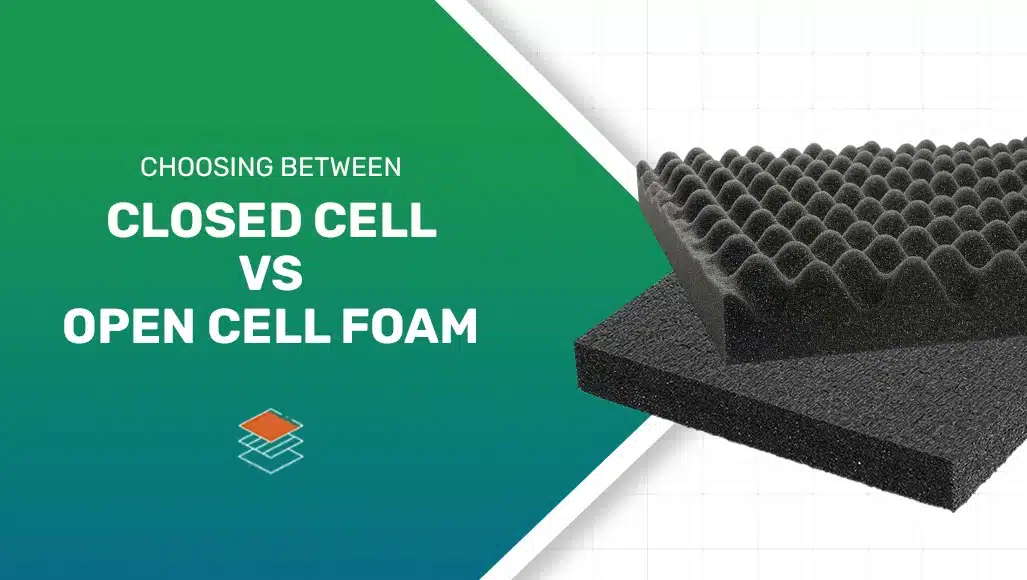
Selecting the right material is the first and most critical step in engineering high-performance packaging, yet the choice between closed cell vs open cell foam often leads to challenges for procurement managers and engineers alike. While open cell foam provides excellent cushioning and breathability for lightweight items, it serves a different functional purpose than the high-density support found in heavy-duty industrial or military applications. In contrast, closed cell foam offers superior moisture resistance, making it a definitive choice for long-term equipment protection in harsh environments.
Understanding the molecular differences between these materials is essential for ensuring proper shock absorption and preventing material degradation over time. This article breaks down the physical properties of each foam type, comparing density, durability, and application suitability to help you make an informed decision for your custom inserts.
The Molecular Architecture of Protection
At the core of foam engineering is the fundamental distinction between open cell and closed cell architectures. While both materials begin as expanded polymers, their cellular morphology dictates how they interact with the physical world.
Open Cell Foam: The Interconnected Network
In open cell foams, the expansion process involves the rupture of cell membranes, leaving behind a network of interconnected struts. This architecture resembles a three-dimensional net or a sponge, where the void space is continuous. Because the cells are open, air, water, and vapor can pass freely through the material. This structure makes the foam exceptionally pliable and soft to the touch.
Closed Cell Foam: The Discrete Bubble
Conversely, closed cell foams are comprised of discrete, sealed bubbles where each cell is entirely encapsulated by its own polymer wall. During the foaming process, these cells remain intact, trapping gases like nitrogen or physical blowing agents inside. This creates a pneumatic effect where the trapped gas provides structural support and buoyancy. The intact walls also act as a barrier against environmental ingress, making the material inherently hydrophobic.
Mechanical Performance and Density Dynamics
When engineering a custom insert for a high-value case, density is the primary baseline indicator for a foam’s durability and load-bearing capacity. It is important to distinguish density (the amount of polymer mass in a given volume) from firmness (the surface feel).
- Low-Density Cushioning: Open cell polyurethane (PU) foams typically fall in the 0.5 to 3.0 pounds per cubic foot (pcf) range. These materials are favored for their cradling ability, conforming to the shape of delicate objects to provide soft cushioning.
- High-Density Support: Closed cell foams, such as polyethylene (PE) or cross-linked polyethylene (XLPE), occupy the medium to high-density spectrum, often ranging from 2.0 to 18.0 pcf. These materials provide significant structural integrity, allowing them to support heavy industrial equipment and military-grade components without collapsing.
The resilience of these materials is often measured by their ability to return to its original thickness after being compressed. Closed cell materials, particularly those that are cross-linked, are designed to maintain their original dimensions over many shipping cycles, which is a key consideration for reusable packaging.
The Science of Shock Absorption
The ultimate goal of any custom foam insert is to act as a shock absorber, decelerating an object to prevent the transfer of damaging kinetic energy. Engineers use cushion curves to match the weight of an item with the right foam thickness and density.
Viscous Damping vs. Pneumatic Pressure
Open cell foam excels at protecting lightweight, high-fragility items. Its energy absorption mechanism is primarily viscous damping; as air is squeezed out of the interconnected cells, the object is decelerated over a longer period. This is ideal for precision military sensors or optical instruments with low G-limit ratings.
Closed cell foam utilizes pneumatic pressure. Because the gas is trapped, the foam can absorb more energy in a thinner profile. This is a critical advantage when trying to minimize container size and reduce shipping costs for heavier items like computer systems, aircraft components, or engine parts.
Environmental Resilience and Chemical Compatibility
High-performance packaging must often endure more than just physical drops; it must withstand moisture, extreme temperatures, and chemical exposure.
- Moisture Protection: Closed cell foam is the definitive choice for moisture-sensitive applications, acting as an integrated vapor barrier that prevents condensation and corrosion on sensitive metallic components.
- Thermal Stability: Cross-linked closed cell foams (XLPE) offer superior thermal stability, withstanding continuous temperatures up to 194°F. This makes them the preferred material for aerospace applications where high ambient heat is a constant factor.
- Chemical Resistance: Polyethylene (closed cell) is highly resistant to aqueous solutions of salts, acids, and alkalis. Polyurethane (open cell) is resistant to many oils and solvents, though it is more likely to absorb leaks rather than repel them.
Strategic Procurement and Sustainability
For procurement managers, the choice involves a balance of upfront cost and lifecycle value. Open cell foam is generally more cost-effective on a per-volume basis and is an excellent choice for lightweight, single-use consumer goods.
However, closed cell foam offers a high return on investment for high-value equipment. Its durability allows a single set of inserts to be used for dozens of shipping cycles. Additionally, polyethylene is a thermoplastic, meaning it can be melted down and recycled, supporting corporate sustainability goals.
Ensuring Compliance
In many industries, specifically defense and aerospace, foams must meet strict regulatory standards. Whether it is MIL-PRF-26514 for polyurethane or flame-retardant standards like FAR 25.853, selecting the right foam ensures your packaging is mission-ready.
Optimizing Your Protection Strategy
The engineering of protective packaging is not a one-size-fits-all endeavor. Open cell foam remains the preferred material for lightweight, delicate items requiring soft cushioning and high-frequency vibration absorption. Closed cell foam, particularly in its cross-linked forms, is the definitive choice for industrial and military applications requiring high-density support and environmental resilience.
By leveraging the unique properties of these materials, the experts at American Foam Products can help you design a system that keeps your most valuable assets in perfect working order.
Ready to secure your high-value equipment? Contact us today to discuss your project requirements and engineer a custom foam solution that provides the level of protection your mission-critical assets demand.