(440) 352-3434
Blog
Selecting the Right Foam for the Summer Heat
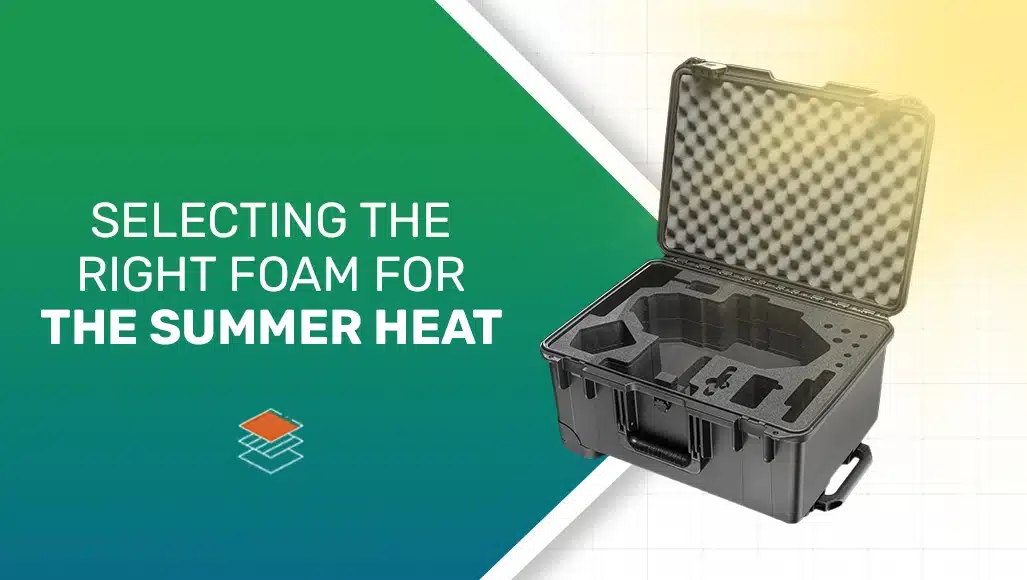
As we move into the summer months, the logistics landscape faces a unique set of challenges. Rising temperatures and the increased pace of seasonal shipping mean that your high-value equipment, from aerospace sensors to medical robotics, is often exposed to the stifling heat of metal containers or tarmac transit. In this high-stakes environment, the materials you choose must be as agile as they are protective.
One effective strategy for managing these high-stakes shipments is lightweighting. This approach offers the option of reducing the parasitic mass of your packaging to cut shipping costs and fuel consumption without compromising the safety of the components inside. Whether you are shipping automotive sub-assemblies or delicate electronics, the custom foam insert is the engine of protection that determines if your shipment survives the summer heat and the rigors of transit.
The Hidden Risk of Standard Padding
Relying on generic stock foam inserts is a recipe for inflated costs and inadequate protection. While these solutions offer immediate convenience, they often lack the long-term durability required for industrial use. Many standard foams are susceptible to compression set, where the material remains permanently dented after a single strike, losing its ability to cushion future impacts.
Furthermore, over-engineering with dense, generic padding drives up costs. In a logistics landscape where carriers use Dimensional Weight (DIM) pricing, every unnecessary inch and ounce translates directly to higher shipping fees and a larger carbon footprint.
A Simple Guide to Your Material Options
To select the right foam, it helps to understand how these materials behave under pressure. Both Polyethylene and Expanded Polypropylene are closed-cell foams, made of independent, gas-filled bubbles that are completely sealed off from one another, making them naturally resistant to water, rot, and chemicals.
Polyethylene (PE) Foam: The Versatile Cushion
Polyethylene’s molecular structure is flexible, which makes it excellent at wrapping around irregular shapes and providing soft cushioning for fragile items.
- Best For: Fragile items like glassware or delicate electronics that need soft energy absorption at lower force levels.
- Weather Resistance: It handles standard ambient conditions effectively.
- Structure: It provides an excellent strength-to-weight ratio, making it a favorite for weight-sensitive packaging.
Expanded Polypropylene (EPP): The High-Stakes Champion
EPP is a more sophisticated bead foam designed for high-stress environments. It is naturally stiffer and possesses superior shape memory, bouncing back to its original form even after heavy impacts.
- Best For: Heavy-duty, reusable shipping systems (dunnage) where the packaging is used for hundreds of trips.
- Extreme Resilience: It can be compressed to 25% of its size and return to form with less than 5% performance loss after 1,000 cycles.
- Heat Tolerance: EPP is the ultimate choice for summer logistics; it stays structurally sound in high temperatures up to 130°C.
For a deeper look at high-durability options, read our guide on Why XLPE Foam is the Industrial Workforce.
How Smart Foam Selection Saves You Money
In the world of shipping, space is money. Carriers calculate costs based on Dimensional Weight, which factors in the volume of the box rather than just its actual mass.
By using high-performance foams like EPP, which have a superior strength-to-weight ratio, we can often reduce the thickness of the foam walls while keeping your equipment just as safe. Reducing the dimensions of a shipping box by just 2 inches can significantly drop the billable weight, leading to massive savings over thousands of shipments.
This efficiency is especially critical during the summer months. Standard foams can soften or lose their structural integrity when temperatures rise inside shipping containers or on sun-drenched tarmacs. Because EPP maintains its mechanical properties and dimensional stability in temperatures up to 130°C, you don’t have to over-engineer the package with extra-thick, heavy padding just to compensate for heat-induced softening. Selecting a heat-resilient, lightweight foam allows you to keep the packaging slim and cost-effective, even when the mercury rises.
Value Over Volume
The goal is to find the sweet spot; the exact density and thickness of foam that provides maximum protection with the minimum amount of material.
Whether you need the soft, flexible protection of Polyethylene or the rugged, multi-impact resilience of Expanded Polypropylene for the busy summer season, we have the technical expertise to design the perfect solution.
Contact us today for a consultation and let us help you protect your high-value equipment with precision-engineered foam.