(440) 352-3434
Blog
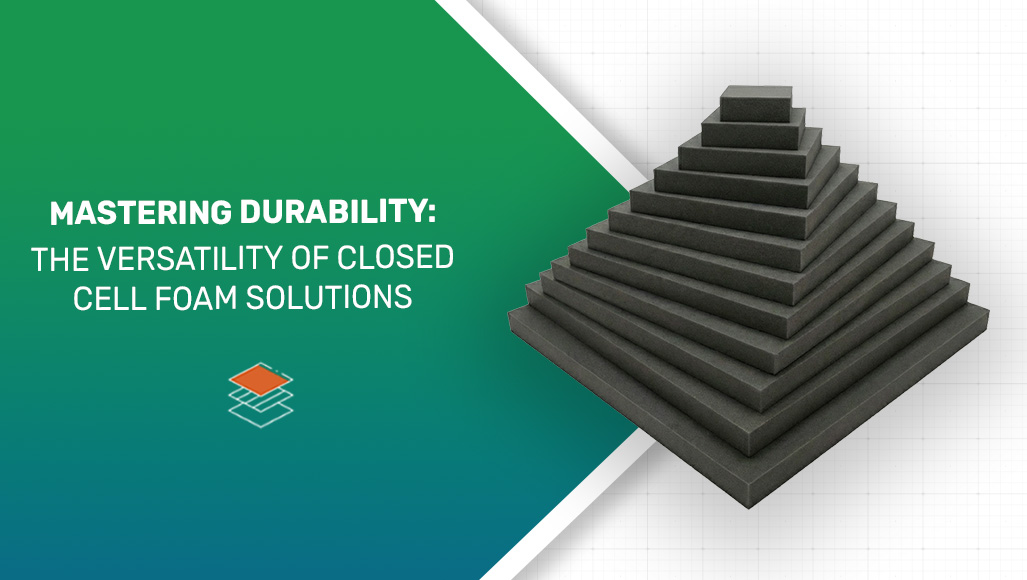
Mastering Durability: The Versatility of Closed Cell Foam Solutions
Key Takeaways
- The discrete, sealed-cell architecture of closed cell foam creates a near-perfect, non-absorbent barrier against moisture, vapors, and biological growth.
- Closed cell polyethylene provides the high mechanical rigidity and load-bearing capacity required for the “blocking and bracing” of heavy industrial equipment.
- Utilizing advanced manufacturing like high-pressure nitrogen expansion results in a chemically pure, isotropic material that offers consistent protection in all directions without the residues found in traditional chemically blown foams.
Ensuring your gear reaches its destination intact is our top priority. While the exterior container provides the first line of defense, the true measure of protection lies in the internal architecture: the foam. While generic “pick-n-pluck” options are common, they often lack the structural integrity required to meet the rigorous demands of modern logistics.
It’s important to understand the engineering behind closed cell foam to ensure the long-term integrity of your gear. This material is not just padding; it is a precision-engineered barrier designed for the harshest environments on earth.
Choosing the Right Architecture for the Job
Many professionals rely on stock, open-cell foam inserts because they are economical and easy to customize by hand. Open-cell materials are ideal for acoustic dampening and air filtration, as their interconnected, porous network allows acoustic energy and fluids to pass through the material rather than being blocked. This soft, compressible architecture is best for lightweight goods requiring high flexibility, but the ruptured cell walls result in a structure that acts differently than its closed-cell counterparts.
In specific industrial settings, this porosity presents different considerations:
- Moisture and Contamination: While open-cell foam is excellent for air and fluid filtration, its high permeability means it can act as a sponge in wet environments. This can lead to the growth of mold or mildew if the material is exposed to consistent humidity.
- Structural Fatigue: Open-cell foams are designed for soft compression and high flexibility. For heavy-duty applications, they may lack the rigidity to prevent bottoming out, where equipment strikes the container wall during a heavy impact.
- Sensitivity: For medical instruments or delicate optical sensors, the higher risk of moisture wicking in open-cell structures is a factor to consider compared to the non-absorbent nature of closed-cell PE.
The Strategic Choice: Custom Closed Cell Foam
At American Foam Products, we specialize in custom-fabricated closed cell polyethylene (PE) foam. Closed cell foam is composed of independent, air-filled voids completely encased in a continuous polymer shell. This discrete cellular structure provides a near-perfect barrier against liquid, vapor, and mechanical stress.
Determining if Closed Cell Foam is Right for Your Equipment
While every project has unique requirements, closed cell polyethylene is often selected for industrial applications based on several distinct performance metrics:
- Non-Absorbent and Hydrophobic: It inherently resists water and chemical absorption, maintaining its protective properties even when submerged.
- High Strength-to-Weight Ratio: It offers the mechanical rigidity required for “blocking and bracing” heavy equipment without adding unnecessary bulk to your shipment.
- Exceptional Chemical Resistance: Polyethylene is non-polar, meaning it remains stable when exposed to diesel fuel, oils, and many industrial acids.
Technical Deep Dive: Selecting the Right Material
Understanding the molecular science behind your packaging allows you to specify a solution that fits your exact performance profile.
Material Families: EPE vs. XLPE
When choosing a material, the primary distinction is the molecular bond.
- Expanded Polyethylene (EPE): A highly recyclable thermoplastic with a great strength-to-weight ratio, ideal for surface protection and electronics.
Cross-Linked Polyethylene (XLPE): The gold standard for durability. Through chemical or physical cross-linking, the polymer chains are locked into a 3D network. This results in XLPE foam with superior dimensional stability and a very low “compression set,” meaning it rebounds to its original shape even after years of repeated use.
The Role of Density
Density is the primary indicator of a foam’s weight-bearing capacity.
- Low Density: Best for lightweight cushioning and vibration dampening.
- High Density: Necessary for structural supports and heavy-duty industrial gaskets.
Precision Fabrication: CNC Routing
The transition from a raw closed-cell foam plank to a finished insert requires precision technology. At AFP, we rely on CNC routing to produce custom foam inserts with exacting accuracy. CNC routing is ideal for complex, one-piece inserts, allowing multiple depths and contours to be carved into a single block to securely cradle parts, tools, or equipment while maintaining tight tolerances and consistent repeatability.
Defense and Industrial Compliance
For our partners in the defense sector, we provide materials that meet rigorous Military Specifications (Mil-Spec). Whether you require Anti-Static (Grade B) foam for electronics or Fire Retardant (Grade C) foam for hazardous environments, our solutions are engineered to comply with the highest standards of quality control and supply chain security.
Partner with the Experts at American Foam Products
Don’t leave the safety of your high-value equipment to chance. A custom foam insert is a strategic investment in the longevity and reliability of your tools. Whether you need closed cell foam sheets for lining shipping containers or high-density closed cell foam blocks for securing heavy machinery, American Foam Products has the technical expertise to deliver.
Contact American Foam Products today to discuss your project requirements and receive a consultation on the ideal material and fabrication method for your application.